
Guide
Wedding decor checklist by area, and who to confirm for each item
A wedding decor checklist by area, from the entrance through send-off, with optional lines marked and a name to confirm before you buy flowers, furniture, or paper.
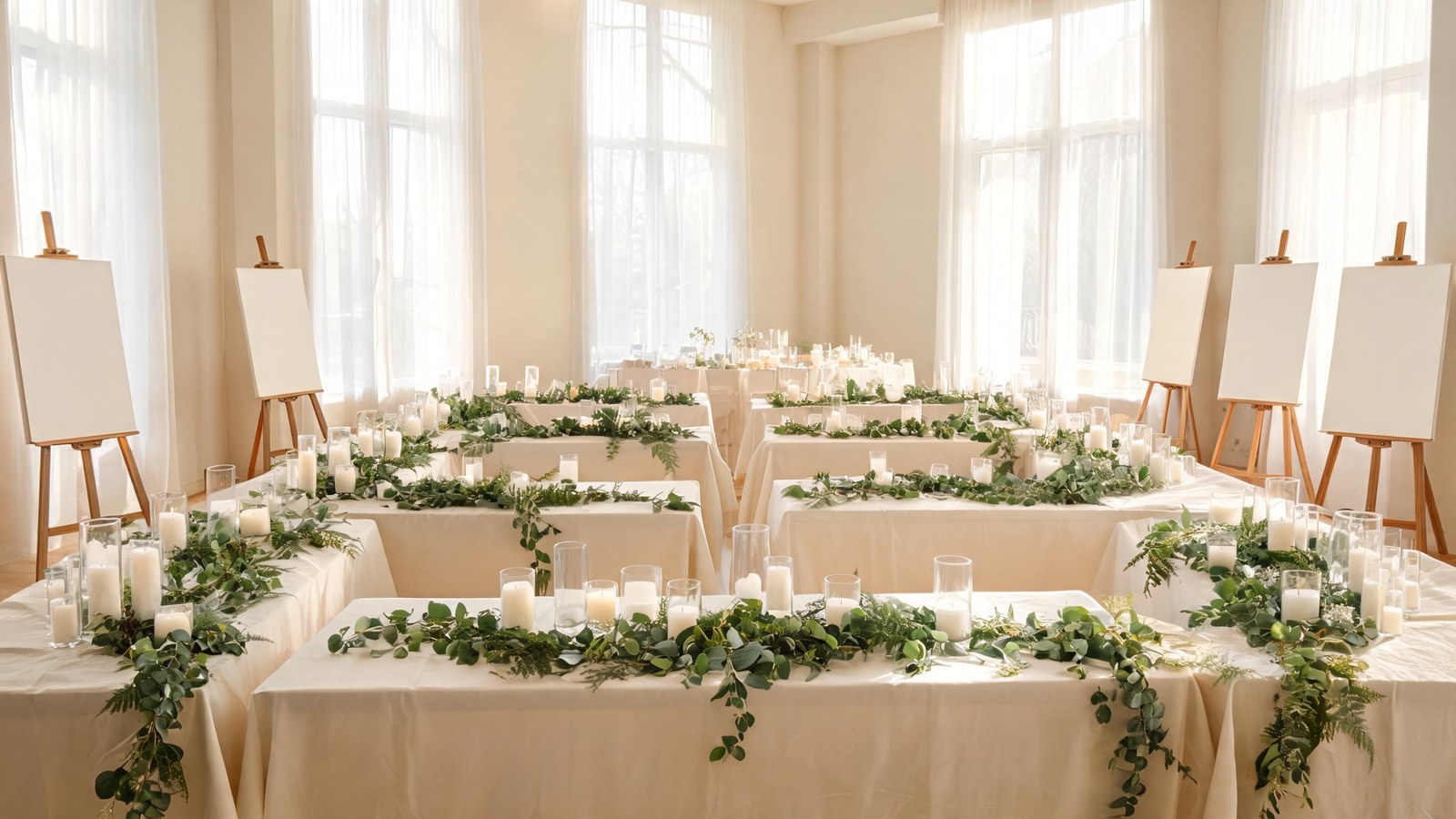
Use this list area by area. The Knot's decor checklist names an aisle runner, vow books, a ring bearer pillow, a flower girl basket, cocktail tables, lounge seating, a dance floor, a cake topper, a favor table, send-off items, and a tent among the pieces for that day. A line marked (optional) is one you can skip when your day does not use it, or when the venue already owns it.
Entrance
- Welcome board with both names, the date, and a greeting if you want one
- Direction line where parking and the ceremony door are not the same spot (optional)
- Stand, hook, or post, confirmed with the venue before you assume one is waiting
Ceremony
- Reserved-seat signs for parents and grandparents in the front rows
- Aisle markers, such as small flowers, bows, or candles (optional)
- Aisle runner (optional)
- Arch or altar arrangement when the room does not already frame the vows (optional)
- Program, or one ceremony sign in its place (optional)
- Vow books (optional)
- Flower-girl basket, petals, or a small bouquet (optional)
- Ring-bearer pillow or box (optional)
- Unity candles, sand, or another ritual object, only if you are using that ritual (optional)
Cocktail hour
- Cocktail tables, high-top or low, so drinks have a place to land
- Lounge seating for the gap between ceremony and dinner (optional)
- Candles or small centerpieces on those tables (optional)
- Lawn games (optional)
- Welcome board moved here if this door is not the ceremony door (optional)
Reception tables
- Tables and chairs, after you ask what the venue rental already includes
- Linens, plates, and glassware, only for what the venue or caterer does not already provide
- Table marker a guest can read from the doorway
- Seating list at the door, or place cards with the table marked
- Menu, if the meal is not obvious from the buffet labels (optional)
- Centerpiece low enough that the table marker stays in view (optional)
- Reception lighting, such as uplights, string lights, or candles, after the venue says which lights and open flame it allows (optional)
Bar
- Drink list for signature drinks, beer, wine, and the rest of the bar
- Extra glassware, only if the bar team does not already supply it
Cake and dessert
- Cake display, or a dessert table if you are not serving a cake
- Cake topper (optional)
Favors
- Favor table, if guests take a gift home (optional)
Guest book and gift table
- Guest book, a binder, or another sign-in keepsake, with pens (optional)
- Gift table near the entrance for cards and wrapped presents (optional)
- Card box on that table, ideally one that closes (optional)
- Small sign that tells guests where cards and gifts go (optional)
Dance floor and lounge
- Dance floor, if the room does not already have one
- Lounge seating, if cocktail hour did not already leave a place to sit (optional)
Outdoor and tent
- Tent, if the site has no roof (optional)
- Floor, sidewalls, or lighting the tent rental does not include (optional)
Send-off
- Sparklers, bubbles, confetti, or another exit item (optional)
- Basket or small table where guests pick that item up (optional)
Who to confirm
Ask before you buy. The couple prints the paper. The venue, caterer, or florist may already own the furniture and the flowers.
| Item | Confirm with |
|---|---|
| Welcome board | Couple prints it; venue for the stand |
| Direction line | Couple writes it; venue for where it may be posted |
| Reserved-seat signs and pew cards | Couple prints them; ushers seat the holders |
| Aisle runner, markers, arch | Venue rules first; florist or rental after that |
| Vow books, flower-girl items, ring-bearer items | Couple, and only if those people are in the wedding |
| Programs | Couple or stationer; officiant checks the order |
| Cocktail tables and lounge seating | Venue rental package |
| Tables, chairs, linens, plates, glassware | Venue or caterer |
| Table markers and seating list | Couple |
| Centerpieces | Florist or couple, after the venue's rules |
| Drink list | Couple writes it; bar team serves it |
| Cake display and topper | Baker, or the couple if the topper is separate |
| Favor table, card box, guest book | Couple |
| Gift table and who carries gifts home at the end | Venue for the table; couple names one person |
| Reception lighting | Venue first; lighting or rental company for what it lacks |
| Dance floor | Venue, or a rental company if the floor is not there |
| Tent | Venue, or a rental company if the site has no roof |
| Send-off items | Couple, and the venue if open flame or confetti is limited |
The Knot groups the same day into ceremony, reception, and cocktail hour, and it names the venue or caterer for tables and drinkware. Rustic and Main's checklist lists ceremony, reception, and table items and does not name who supplies each one. Lace and Favour's guide walks the day from ceremony to table decor and does not assign a supplier to each item. The column above is the piece those lists leave out: one name to ask before you buy.
What a few of the lines are for
The welcome board carries names, initials, the date, and an optional greeting, and The Knot places it near the main ceremony entrance so guests are not lost before the ceremony. Emily Post describes the same job on the road: a painted board reading "Will and Susan's Wedding" told a lost driver the bend was the right one. A direction line, such as "Please Park Here," belongs on that board only when the path splits. Wording patterns are in welcome sign ideas.
Reserved seats come before flowers. Emily Post's ceremony seating note places the parents of the bride in the first pew or row on the left and the groom's parents in the first row on the right, and it says same-sex couples may assign each family a side instead. It is fine not to have sides. The Knot puts reserved-seat signs on the first two or three rows for parents and grandparents. Programs are not required. Emily Post says they help guests follow a ceremony from another culture or religion. The Knot says a program, or one ceremony sign in its place, can list the order, the wedding party, and the titles of readings or songs. Aisle markers, when you want them, are usually small flowers, bows, or candles on the aisle side of each row. Rustic and Main treats the venue itself as part of the decor: stained glass and pews in a church, trees and paths in a garden. Ask the officiant which of these the site already has.
At the tables, The Knot notes that many wedding venues include tables as part of their rental equipment, so you may not need to rent them. Ask the same question about chairs, linens, plates, and glassware, and ask the venue or caterer what drinkware they provide before you rent a second set. Then the paper: a table marker guests can see from the doorway, a seating list or place cards, and a menu if the meal is not obvious. Emily Post calls place cards a must at all but the most casual weddings, and says assigning an actual seat is usually reserved for the most formal ones. How to build the alphabetical list is in how to make a wedding seating chart. Layout ideas for the room are in seating chart ideas. Ideas for the marker itself are in table number ideas. Rustic and Main says to start with the large pieces, tables, chairs, lighting, and the arch, and to add the small pieces after that. Keep the centerpiece low enough that the marker stays visible.
Cocktail hour needs less decor than dinner. The Knot describes a list of the signature cocktails, beer, wine, and other drinks, and says that list can be reused at the reception. The same checklist places the card box alongside the guest book and the seating chart, and it says a greeting sign can move from the ceremony to the reception door. A dance floor is yours to supply when the venue does not already have one, including outdoors. A tent is yours to procure when the site has no cover. The Knot says to run these lists by your venue team before you buy.
The guest book and the gift table often share one spot. The Knot describes the gift table, sometimes called the welcome table, as the place for a card box, the guest book, and presents, and it lists uplights, string lights, and candles among the lighting to coordinate with your venue. Lace and Favour suggests a secure container for cards and a sign that labels the card and gift station.
A garden dinner (illustrative)
Maya and Jordan host dinner in a garden barn. The venue includes long tables and chairs and does not include linens. They print one welcome board for the gravel path, pew cards for the two family rows, table markers that clear the low greenery, an alphabetical seating list at the barn door, and a short drink list for the bar. The florist brings centerpieces only. A sailcloth tent is already on the site, so they do not rent a second one. Those counts are invented so you can see the order of the questions, not a recommended guest total.
Paper for four jobs
Once the walk-through shows which paper the day needs, those four jobs can share one set of files. The Wedding Reception Paper includes files to help wedding guests find their already assigned table in an alphabetical directory, identify already assigned reception tables with large numbered flat cards, display a wedding drink selection with original glass illustrations and buyer-written menu text, and welcome wedding guests with couple names, date, venue and a personal greeting. It is a digital download for one wedding, and no physical product or print service is supplied.
Flowers, chairs, linens, lighting, a tent, and a dance floor stay outside those files. A published list also cannot know what your venue already owns. A wider planning order, if you are still building the whole day, is in the wedding planning checklist.
Questions and answers
What all do you need for wedding decor?
Walk entrance, ceremony, cocktail hour, reception tables, bar, cake, favors, dance floor, outdoor cover, and send-off. Start with a welcome board, reserved-seat signs, table markers, a seating list, and a drink list, then add flowers, a tent, or lighting only after the venue says what it already includes.
What decor items do I need for a wedding?
You need a way for guests to find the door, the ceremony, and their seats, plus tables, chairs, linens, and a drink list if you are serving. Skip any item the venue or caterer already provides, and skip a line marked optional when your day does not use it.
How to organize wedding table decor?
Confirm tables, chairs, and linens with the venue first. Then place a visible table marker, place cards or a seating list, a menu if the meal is not obvious, and a centerpiece low enough that the marker stays in view.