Blog
Wedding Thank You Card Wording: Eight Examples by Gift
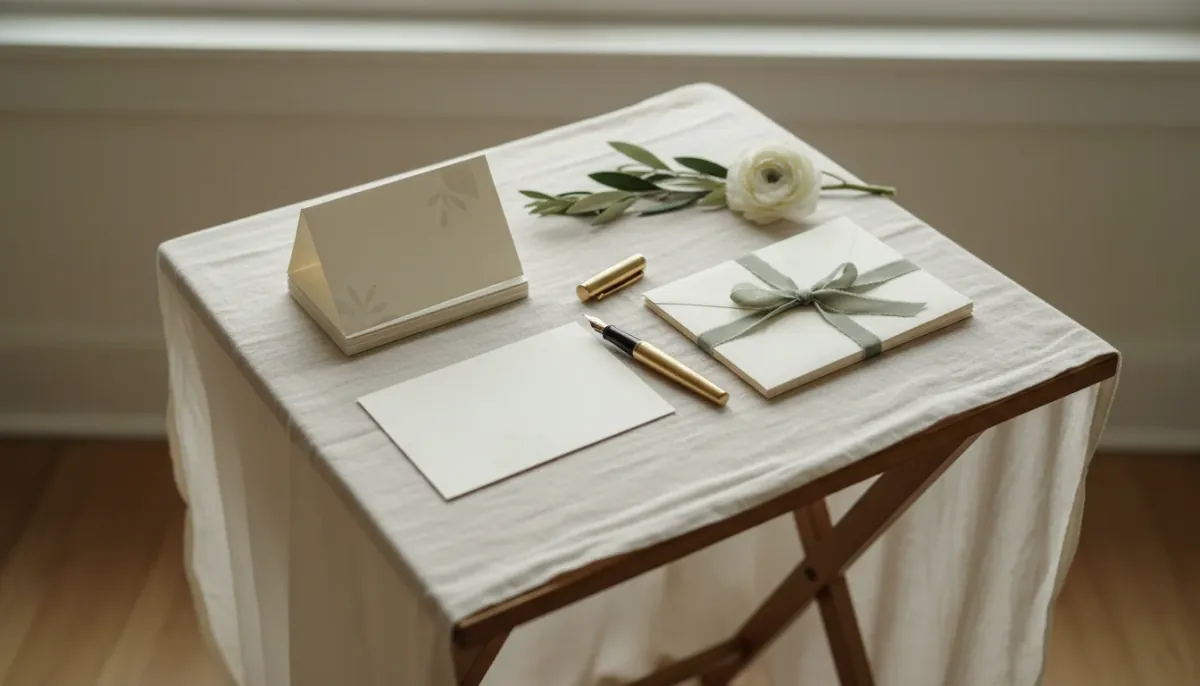
After the wedding, a pile of gifts and a long guest list can make every thank-you note feel like the same sentence written sixty times. Good wedding thank you card wording names the person, the gift and how you'll use it. The eight examples below are sorted by gift type, from cash and registry gifts to guests who helped on the day or came without a gift.
Every good wedding thank-you note does three things. It names the gift, it says how you'll use it or what it meant, and it says something about the person. Change the middle sentence for each kind of gift and the rest takes care of itself. Write each note by hand, and aim to send it within three months of the day the gift arrived.
A thank-you note works when the person reading it can tell it was written only for them.
The three sentences of a good thank-you note
Start with the gift, in plain words. "Thank you for the blue mixing bowls" beats "Thank you for your lovely gift." Then say how you'll use it, or what it meant. Then close with the person, such as a moment from the day or a plan to see them.
The Emily Post Institute's wedding thank-you dos and don'ts start with the same idea. Its first rule is to "make reference to the person as well as the gift." It also asks you not to "gush," and not to tailor your note to how much the gift cost.
Don't worry about finding perfect words. A 2018 study reported by the Association for Psychological Science found that people who wrote thank-you letters underestimated how surprised and happy the readers would be. They also "overestimated the awkwardness" the readers would feel. Plain, specific thanks lands better than you expect.
1. Cash or a check, say what the money will go toward
Money is the gift couples find hardest to thank for. Emily Post's advice on wedding thank yous says that naming the amount is optional. Saying what you plan to do with it is the part that matters.
"Dear Aunt Lena, thank you so much for your generous gift. It's going toward our honeymoon in Maine, and the first lobster dinner will be in your honor. It meant the world to have you dancing with us."
Name the trip, the project or the cause when the gift is a honeymoon fund, a savings account or a donation made to a charity in your name.
2. A gift from your registry, say how you're already using it
A registry gift is easy to make generic, because you picked it yourself. Make it personal by saying when you used it, or when you will.
"Dear Sam and Priya, thank you for the cast-iron pan. It's already on the stove most nights, and it makes the best cornbread we've had. We loved catching up with you at the reception."
If the gift hasn't been used yet, say what you'll use it for. "The picnic blanket is packed for our first trip to the lake" works fine.
3. Off-registry and handmade gifts, name the thought behind them
Something a guest chose or made on their own deserves a line about the choice. Mention the detail you noticed.
"Dear Grandpa Joe, thank you for the cutting board you made from the old oak. We'll think of the farm every time we use it. Having you walk in with Grandma was one of our favorite moments of the day."
If the gift isn't something you'd have picked, thank them for the thought and the care. Never mention a return or a gift you didn't like, as the Emily Post dos and don'ts point out.
4. A group gift, write one note to each person
When coworkers or friends chip in together, everyone who gave gets their own note. The Institute's advice is that individual notes "should be written to people who contributed to a group gift." The notes can share a middle sentence, with a different first and last line for each person.
"Dear Marcus, thank you for being part of the stand mixer from the team. We've already made two birthday cakes in it. Thanks for keeping the office running while we were away."
If one person organized the gift, add a line for that work in their note.
5. Guests who came but gave no gift, thank them for being there
Not every guest brings a gift, and you don't need one to send a note. Thank them for traveling, for celebrating with you, or for a moment you shared.
"Dear Ana, thank you for flying in from Denver to be with us. Seeing you on the dance floor during our song made the night. We hope to visit you in the spring."
A note to a guest who gave no gift is a kind touch. Many couples send one anyway, especially to guests who traveled far.
6. Someone who helped with the wedding, name the help
Friends and family who baked the cake, drove guests, did hair or ran the playlist get a note for the help. Emily Post's list includes "anyone who assists you before, during or after your wedding," and people who housed or entertained out-of-town guests.
"Dear Becca, thank you for spending the whole morning on our flowers. Every guest asked who made the centerpieces, and we were proud to say it was you. We couldn't have pulled it off without you."
Be specific about what they did. A helper remembers the hours, so name the task and what it made possible.
7. Your parents or whoever hosted, thank them for the day itself
Parents who paid for or hosted the wedding are on Emily Post's list of people who need a note. A thank-you note for the wedding day can be longer than the others. It can be the one you keep writing until it feels right.
"Dear Mom and Dad, thank you for giving us a day we'll talk about for the rest of our lives. From the garden to the late-night pizza, everything felt like us. We're so lucky to have you."
If both families helped, write a separate note to each set of parents.
8. A gift from someone who couldn't come, say you missed them
Guests who sent a gift but couldn't attend get the same three sentences. Add a line that says they were missed, and share one detail from the day.
"Dear Uncle Ray, thank you for the beautiful photo frame. Our first-dance picture is already in it on the mantel. We missed you and toasted to you at dinner."
For a gift that came by mail, let them know it arrived. Shipped gifts should be acknowledged right away, according to the Emily Post dos and don'ts.
When to send wedding thank-you notes
The Emily Post Institute says all thank-you notes "should be written within three months of the receipt of the gift." Ideally, you write the note on the day the gift arrives. Gifts that come before the wedding can be thanked before the wedding.
A pace makes the three months easy. Three months is about 13 weeks. If 120 guests come as 60 households, that's about five notes a week. Set a fixed evening for them and keep a gift list with a "note sent" column.
There's no one-year grace period. Being late is no excuse to skip the note, say the Emily Post dos and don'ts. Keep writing even after your first anniversary. A late note with a short apology still beats no note.
How to choose wedding thank you card wording for each gift
Find the gift type, then build the middle sentence from the second column.
| Gift or person | Sentence 2 says | Watch out for |
|---|---|---|
| Cash or check | What the money goes toward | Naming the amount is optional |
| Registry gift | How you're already using it | Sounding like a receipt |
| Off-registry or handmade | The detail or thought you noticed | Never mention a return |
| Group gift | Your use of the shared gift | One note per person who gave |
| Came, no gift | Their presence or a moment you shared | No mention of gifts at all |
| Helped with the wedding | The task and what it made possible | Thank them even if they also gave a gift |
| Parents or hosts | The day itself | One note per set of parents |
| Sent a gift, couldn't come | That they were missed, plus a detail | Confirm the gift arrived |
Printed cards and handwritten notes
The Emily Post dos and don'ts say not to send "cards with printed messages and just your signature." The Institute's wedding thank-you page also rules out fill-in-the-blank and pre-printed cards. Both are rules about the message. A printed front with your names is stationery, and the note inside should be in your handwriting.
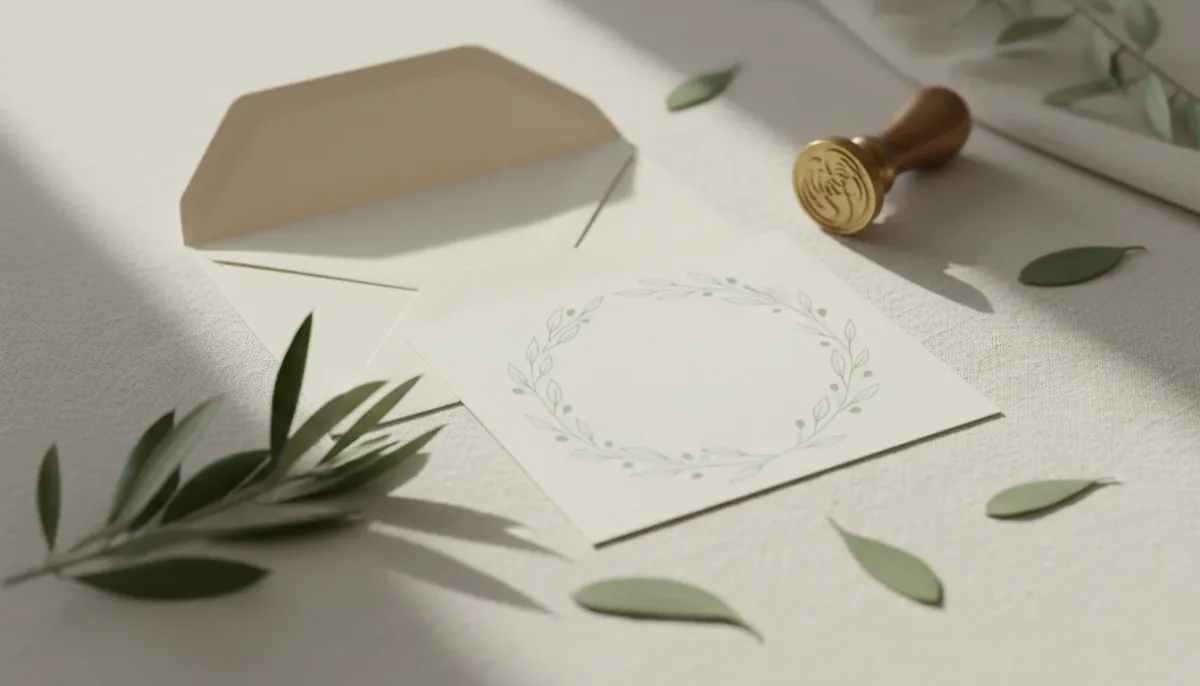
Plan for handwriting with any printed thank-you card, including our wedding thank-you card templates. The flat card prints your heading, names and date on the front, and the back stays blank for your note. The folded card prints the same message inside every card, with your names under it. On its own, that's the printed message the etiquette advice warns against. For handwritten notes, choose the flat card, or print the blank folded version, which leaves the inside empty and the front without names.
For 60 notes, flat cards print two per Letter sheet, so you need 30 sheets of cardstock. Folded cards print one per sheet, so you need 60. Print at Actual size (100%) on cardstock between 80 and 110 lb cover (216 to 300 gsm) and cut on the crop marks.
Our cards are the wrong choice if you want a photo thank-you card, because they don't take photo uploads. They're also wrong if you want cards that arrive printed and boxed with envelopes. You print them yourself and buy the envelopes separately.
Mailing your thank-you cards
A 4.25 × 5.5 in card goes in a rectangular envelope a little larger than the card. The USPS page on sending letters says letters must be rectangular and no bigger than 11-1/2 in long by 6-1/8 in high. They can be no more than 1/4 in thick. Square or vertical envelopes cost more to mail. As of October 2026, a $0.82 Forever stamp covers a 1 oz letter, so 60 notes cost about $49 in postage.
If you still need to word the invitations themselves, the guide to wedding invitation wording covers that.
Frequently asked questions
What are some good messages to write in a wedding thank you card?
A good message has three sentences. Thank the person for the gift by name, say how you'll use it or what it meant to you, and end with something personal about them or the day. For example: "Thank you so much for the blue mixing bowls. We've already made Sunday pancakes in the big one. It meant so much to have you there to see us get married."
How to write a wedding thank you card for money?
Thank them for their generosity and say what the money will go toward, such as the honeymoon, a sofa or savings for a home. Naming the amount is optional. For example: "Thank you for your generous gift. It's going straight into our first-home fund, and we'll think of you when we pick up the keys."
What is a short message of appreciation?
One or two sentences that name what you're thankful for and why. "Thank you for driving Grandma to the wedding and back. We couldn't have had her there without you." A short note still names the person and the thing they did.
Conclusion
Write three sentences per note. Thank the person for the gift by name and say how you'll use it or what it meant. Close with something about them or the day. Money gets a line about what it will go toward, and a group gift gets one note per person. A helper gets thanked for the help itself. Write each note by hand, ideally the day the gift arrives, and have every note in the mail within three months of receiving the gift.