Save the Date Cards for Your Wedding: A Six-Step Guide
Once a save the date is in the mail, you can't take back the date you printed or the guest you sent it to.
Blog · 32 guides
Guides to the paper for your wedding: what to write, when to send it, how to print it and what it costs. They cover save the dates, invitations, signs and thank-you cards, plus planning lists and games. Every guide lists its sources.
Once a save the date is in the mail, you can't take back the date you printed or the guest you sent it to.
Every guest who doesn't reply is a seat and a meal you have to guess.
The invitations are written and the date is close, and the worry now is a run of fifty sheets that comes out faded, too small or crooked.
The cards look cheap until stamps, envelopes and ink land on top of them.
Guests with a nut allergy, and everyone who loves food, want to know what's coming before the plates do.
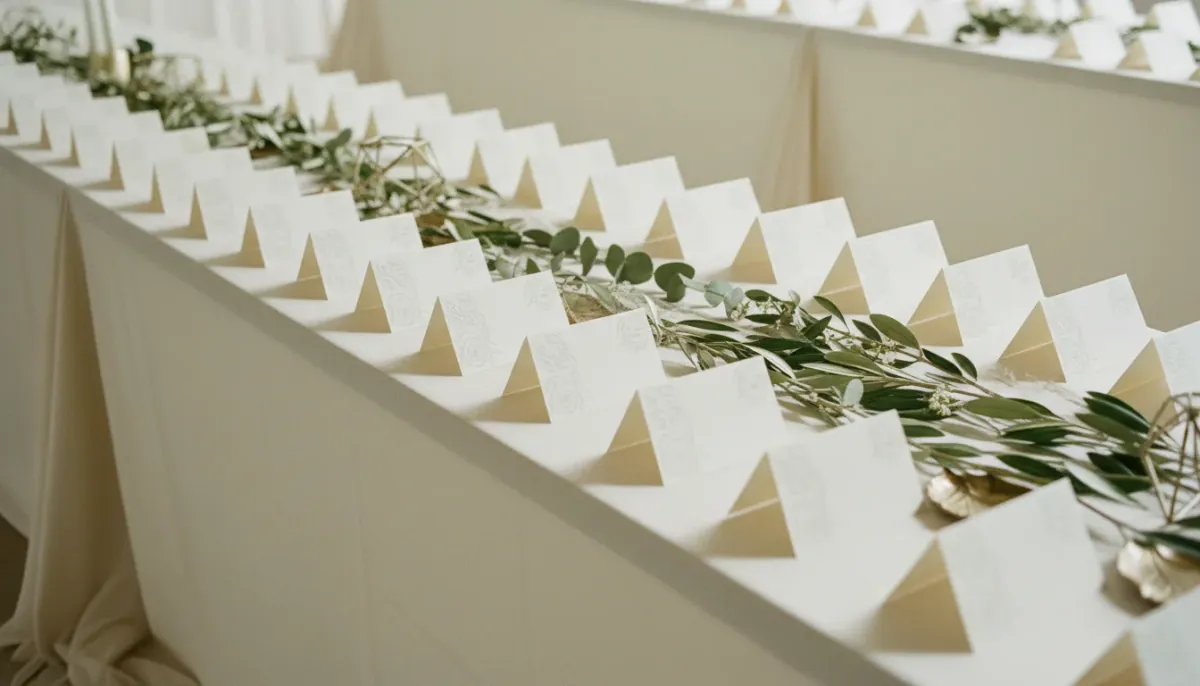
Nobody wants a guest walking the room with a drink in hand, looking for a seat.
Guests want to know what they can order before they reach the bartender, and a slow, confused line is the last thing you want at cocktail hour.
Wedding papers pile up fast, and the signed contract you need is never where you left it.
A crowded invitation is hard to read, and a bare one leaves guests texting you about hotels and parking.
You want every guest to know the little jar or seed packet is a thank-you from the two of you.
Making your own invitations saves money, but the fear is that they end up looking homemade or that a typo reaches 100 guests.
Seating your guests is the job most couples put off, because one forgotten name or one bad pairing is what people remember.
Two cards, two mailings and two rounds of stamps can feel like one job too many when the list is already long.
Most couples start planning with a long list and a nagging fear of forgetting something that matters.
Most couples fear the same thing about money, that the bills will add up to more than they have and nobody will notice until it's too late.
Your welcome sign is the first thing guests read, and it has to tell them they've found the right wedding before they've even reached the door.
The seating plan is done, and now it has to stand somewhere guests will actually see it while a crowd arrives at once.
Signs are one more list on top of everything else, and it's easy to forget the one that stops guests wandering around looking for their table.
The worry is simple: send too late and the guests you most want there may already have plans.
Mail them too late and guests have made other plans, or your caterer needs a count before the replies are back.
You only find out on the day whether guests can read your welcome sign from the door, when it's too late to reprint.
When a friend asks you to officiate, the scariest part is standing up with nothing written down.
You want table numbers that feel like the two of you, but every guest still has to find a seat without asking for help.
A wrong name or host line on 100 printed cards is an expensive mistake to fix.
A classic guest book often ends up as a list of names and little else.
Most couples worry that one late start on the wedding day will push everything else off schedule.
Booking a dozen vendors means a dozen contracts, deposits and due dates, and the worry is that one payment or one booking slips through.
On the wedding morning, the fear is that the rings, the license or the tip envelopes are still sitting at home.
You get one shot at the shoe game, with every guest watching and a microphone in someone's hand.
After the wedding, a pile of gifts and a long guest list can make every thank-you note feel like the same sentence written sixty times.
Most couples worry less about the pretty pictures than about the one family photo nobody remembered to take.
You want guests mixing and laughing, but you don't want a game to stall dinner or hold up the dance floor.