Blog
Ideas for the Seating Chart at Your Wedding: Eight Displays
The seating plan is done, and now it has to stand somewhere guests will actually see it while a crowd arrives at once. Looking at wedding seating chart ideas for your venue comes down to three questions: how many guests will read it, what it costs, and what it needs on the day, from an easel to a long table.
A seating chart display only has one job. A guest walks in, finds their name and walks to a table in under a minute. The ideas below run from the cheapest and simplest to the most work. Each one says which guest count it suits, roughly what it costs and what you need on the day.
The prettiest seating chart is the one nobody has to squint at.
1. Poster on an easel, for most weddings
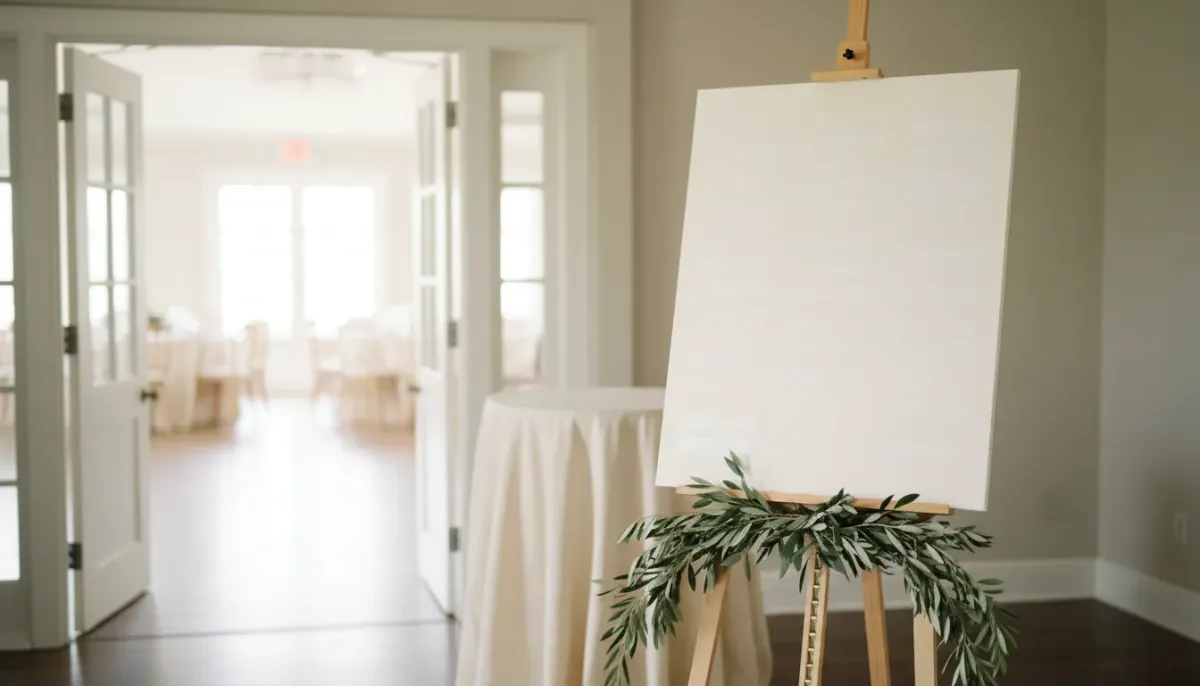
A printed poster on an easel is the default for a reason. It holds a long list, it stands anywhere, and it goes up in minutes. An 18 × 24 in poster suits a short list. A 24 × 36 in poster suits a longer one, up to the full room.
For the day, plan an easel, the poster on foam board, and a spot by the entrance. Ask your venue if they have an easel before you buy one. A ribbon or a bit of greenery at the easel's foot dresses it up without covering names.
If your list is done, our wedding seating chart template prints at both poster sizes for up to 200 guests. After you pay, a download link arrives by email. You paste your list into the personalizer in Google Chrome on your computer, click Download PDF and ask the print shop for foam board. The personalizer works offline, so the guest list stays on your computer.
Every poster idea here has to answer one question first: list guests by name or by table? Our rule of thumb is to go by table up to about 10 tables, where guests scan a few short blocks. Past that, list everyone A to Z by last name with the table number beside each name, so each guest reads one line. Escort cards and hanging cards are always set out A to Z. Both layouts are worked through, with examples, in our wedding table seating chart guide.
2. Framed print, for a small wedding
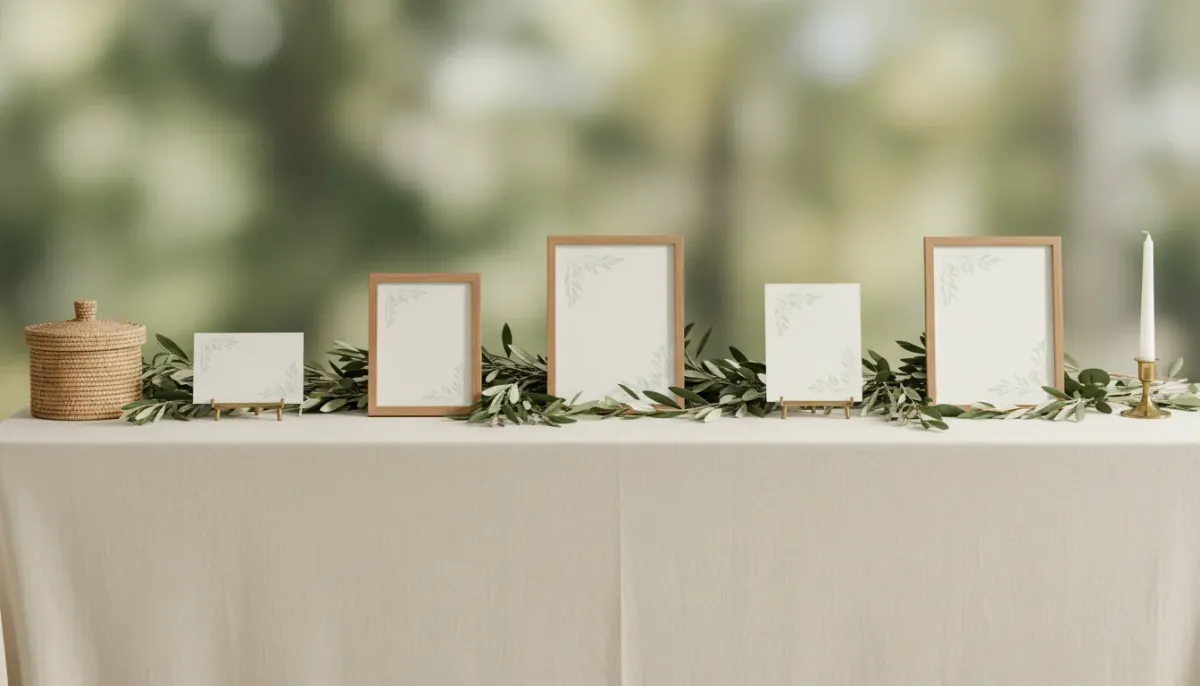
A framed seating chart looks finished and survives a breeze. A frame works best for smaller lists, because it limits the size and a big list gets small type. An 18 × 24 in poster fits a standard poster frame of the same size.
Glass in a frame causes glare. The Smithsonian Guidelines for Accessible Exhibition Design note that glare makes text unreadable for many people with low vision. They recommend eggshell, matte or other non-glare surfaces. Take the glass out, or ask for non-glare acrylic, if the frame stands near a window.
Bring the frame, an easel or a table to lean it on, and something to keep it from sliding.
3. Escort card table, for a long list
Escort cards replace the poster with one small card per guest or couple, each with a name and a table number. Guests pick up their own card and walk away, so a crowd clears fast. That makes them a good idea for 150 guests or more.
Escort cards cost time. You print, cut and lay out every card in alphabetical rows. On the day you need a long table near the door and someone to set the rows straight. The guide to wedding place cards compares escort cards with place cards and covers the wording.
4. Two boards, A to M and N to Z, for a crowd
One chart and 150 arriving guests means a queue. The Smithsonian guidelines warn that crowds change the real viewing distance, because people at the back read from farther away. Split the list and you halve the crowd at each board.
Print the alphabetical chart twice, once with the first half of the alphabet and once with the second. Stand the boards a few steps apart with a clear label on each. You need two easels and two posters, so this doubles the print cost.
5. Mirror or window chart, for a venue with one
Hand lettering on a vintage mirror or a big window looks lovely in photos. Plan it for a small or medium list, because each name is written by hand. A calligrapher or sign maker usually does the lettering, so plan for their price and their schedule.
Glare is the big risk. A mirror reflects every light in the room, and a window turns dark lettering into a silhouette in afternoon sun. Stand in the spot at the same hour as your reception before you commit. Have the list checked against the final RSVPs, since a mirror is hard to correct.
6. Hanging cards on a frame or string, for a relaxed look
Escort cards clipped to strings across an open frame or a branch make a wall of names. Luggage tags tied with twine do the same job for a travel theme. Small to medium lists fit best.
You need the frame, string or twine, clips and time to hang every card in order. Hang them in alphabetical rows. Guests can't find their name in a random cloud of cards.
7. Themed displays, for a small wedding with time to spare
Golf balls in rows, books with names on the spines, framed photos of each table's guests, a Lego board. Themed displays are fun and give guests something to talk about. They are also slow to read, so they work best with a short list.
Every themed display is a craft project. Budget the hours before you budget the money. Put a printed list nearby as backup, because a guest who can't find their golf ball will ask the nearest person, and that may be you.
8. Seating chart beside the welcome sign, for one entrance
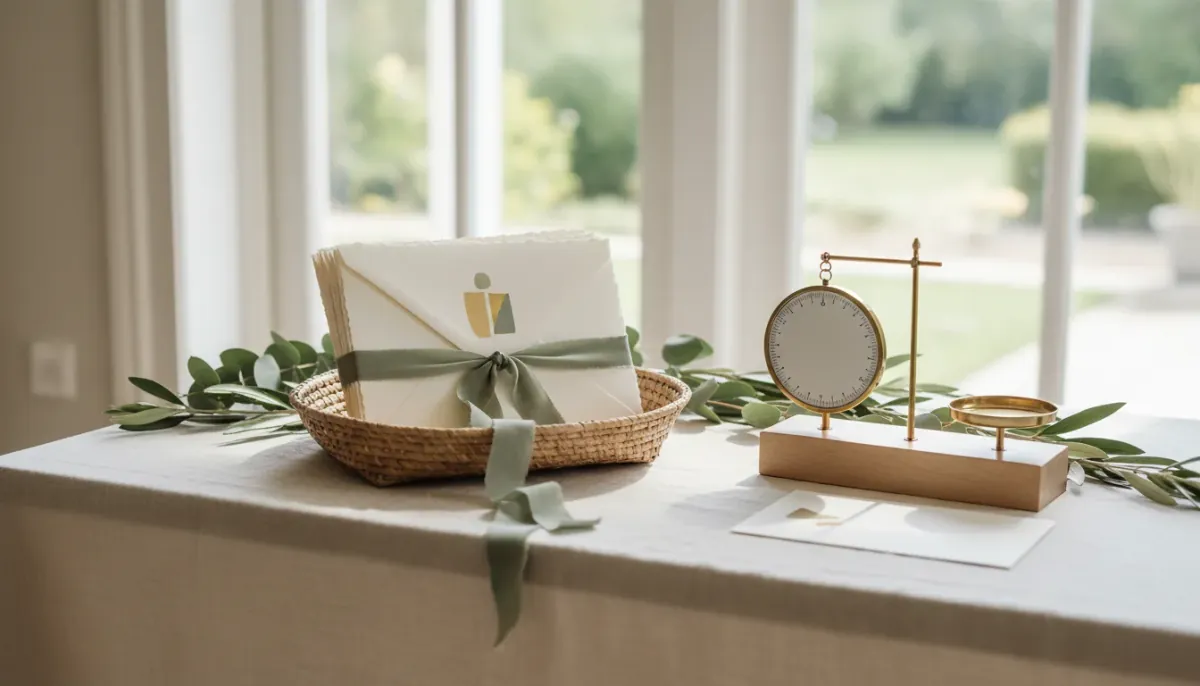
When guests pass one entrance, pair the welcome sign and the seating chart on two easels side by side. Guests read the welcome, then their table, and walk in. Matching designs make the pair look planned.
Keep the doorway clear. OSHA's workplace rule on exit routes says exit routes must be free and unobstructed. A wedding crowd at a door is the same risk. Stand both easels to one side of the door, clear of the path.
Where the chart stands and how big the type is
Height and type size decide whether a guest reads the chart or asks someone. The Smithsonian guidelines call wall labels between 48 and 67 inches above the floor a comfortable height for guests who are seated and standing. A centerline at 54 inches works for everyone.
Type size in the Smithsonian guidelines follows viewing distance. In their table, text read from 1 meter (39 inches) needs about 48-point type, and text read from 2 meters (78 inches) needs about 100 points.
| Where guests stand | Type size for the names | What it means for your chart |
|---|---|---|
| 1 m (39 in), right at the easel | About 48 pt | Fine for guests standing right at the easel |
| 2 m (78 in), a few steps back | About 100 pt | Bigger names, so the larger poster or two boards |
| 3 m (118 in), behind a crowd | About 148 pt | Too far to read a list, so move the chart closer |
The Smithsonian guidelines also note that a script font may not be very legible when it's used for text. Keep the script for the heading and set the names in a plain face.
Setting up a seating chart outdoors
Outside, wind, sun and damp are the risks, and a chart that blows over helps nobody. A foam board on an easel catches wind like a sail. Clip the board to the easel, weigh down or tie the easel legs, and stand it in the lee of a wall, a hedge or a tent pole. A framed chart without glass, leaned on a weighted table, is steadier still.
Sun brings glare. The matte, non-glare surface the Smithsonian guidelines recommend matters most outdoors, so skip glass, mirrors and glossy prints. Check the spot at the hour guests arrive. Pick shade, or a spot where the sun sits behind the guests.
Rain and dew ruin paper and foam board. Bring the chart out shortly before guests arrive, have a covered spot ready as plan B, and carry a spare print or a printed list. If the reception runs past sunset, set a lamp by the easel so the last guests can still read it.
How to choose ideas for the seating chart at your wedding
Start from your guest count, then your budget, then the time you have in the last week. Cost here is relative, from the poster alone to a hired calligrapher.
| Idea | Guest count it suits | Cost | What you need on the day |
|---|---|---|---|
| Poster on an easel | Any, up to the full room | Low | Easel, poster on foam board |
| Framed print | Small | Low to medium | Frame, easel or table |
| Escort card table | Large, 150 and up | Medium, mostly your time | Long table, cards in A to Z rows |
| Two boards, A to M and N to Z | Large | Medium | Two easels, two posters |
| Mirror or window | Small to medium | High if hand lettered | The mirror or window, lettering done ahead |
| Hanging cards | Small to medium | Medium | Frame or string, clips, hanging time |
| Themed display | Small | Medium to high, mostly your time | The objects, a backup list |
| Chart beside the welcome sign | Any | Low | Two easels, a clear doorway |
If you're unsure, a poster on an easel is the safe pick. Our seating chart poster template gives you the 18 × 24 in and 24 × 36 in PDFs in four designs, with your guests by table or alphabetical. The product page shows previews of each design, and the files are for personal use at your own wedding. It isn't the right choice for a mirror, a window or any themed display, which are made by hand. For lists over 200 guests, you'll need escort cards or a second chart.
Still working out who sits where? The guide to the wedding table seating chart covers seating every guest, choosing by table or alphabetical, and picking the poster size.
Frequently asked questions
How big should a seating chart sign be at a wedding?
Big enough for the names to read from where guests stand. For a short list, 18 × 24 in is often enough; for a long list or a crowd that reads from a few steps back, 24 × 36 in keeps the names larger. For 100 guests, our rule of thumb is 24 × 36 in, because many of them arrive at once and the back of the group reads from about 2 meters; choose 18 × 24 in only if guests will walk right up to it, or split the list over two 18 × 24 in boards. Museum guidelines put readable type at about 48 points from 1 meter and 100 points from 2 meters.
Where to put a seating chart at a wedding?
Near the entrance to the reception, where guests pass on their way in, but to one side so the doorway stays clear. Set the middle of the names at about eye level and away from bright light that causes glare.
What is the cheapest way to make a seating chart for a wedding?
A poster printed on poster paper and clipped to a board on an easel you already have or can borrow. Foam board, frames, mirrors and themed displays all add cost.
What font is best for a wedding seating chart?
A plain, upright typeface for the names, at a size that reads from where guests stand. Keep script lettering for the heading, because flowing script is harder to read in a long list of names.
Conclusion
The best of these ideas for the seating chart at your wedding is the one your guests can read in a few seconds. A poster on an easel suits most lists, a frame suits a small one, and escort cards or two boards suit a big crowd. Whatever you choose, keep it near the entrance and out of the doorway, set the names at eye level on a matte surface, and make the type large enough for the distance guests will stand.